What’s Shaking: 5 Cocktail Trends to Watch For

Have you recently ordered a Pink Lady? A Grasshopper? A Blue Hawaii? A Harvey Wallbanger? These were among the most popular cocktails of the 1970s. Most are vibrantly colored and designed to mask the base alcohols with lots of sweet liqueurs and flavors such as mint, orange juice, and coconut. 

Like many things in popular culture, some trends come and go as fads, others last for years before fizzling, and still others become classics with real staying power.

At Downtime Cocktails, we like to keep our eyes on what’s trending in the world of cocktails—we like to see what’s coming into vogue as well as what’s going out. Here are a few trends that seem to be taking hold in the cocktail community.

  1. Simple Is Better

In the past year or so, minimalism has taken hold in the world of mixology.  This trend focuses on the quality of ingredients rather than the quantity – and it has renewed enthusiasm for the classic three-ingredient cocktail. Like other recent trends, such as hyper-seasonal cocktails, demand for minimalist cocktails has followed the rise in demand for local, organic, and sustainable ingredients. In using fewer elements, simplifying garnishes and emphasizing more “whole foods,” bars and restaurants also drastically reduce food waste.

Have you recently ordered a Pink Lady? A Grasshopper? A Blue Hawaii? A Harvey Wallbanger? These were among the most popular cocktails of the 1970s. Most are vibrantly colored and designed to mask the base alcohols with lots of sweet liqueurs and flavors such as mint, orange juice, and coconut. 

Like many things in popular culture, some trends come and go as fads, others last for years before fizzling, and still others become classics with real staying power.

At Downtime Cocktails, we like to keep our eyes on what’s trending in the world of cocktails—we like to see what’s coming into vogue as well as what’s going out. Here are a few trends that seem to be taking hold in the cocktail community.

  1. Simple Is Better

In the past year or so, minimalism has taken hold in the world of mixology.  This trend focuses on the quality of ingredients rather than the quantity – and it has renewed enthusiasm for the classic three-ingredient cocktail. Like other recent trends, such as hyper-seasonal cocktails, demand for minimalist cocktails has followed the rise in demand for local, organic, and sustainable ingredients. In using fewer elements, simplifying garnishes and emphasizing more “whole foods,” bars and restaurants also drastically reduce food waste.

We’ve certainly come a long way since the days of the Grasshopper and the Harvey Wallbanger, but there’s always a chance we’ll see those classics from the ’70s make a comeback someday. If and when they do, we’ll be sure to give ’em a nod!

Who Was Jim Beam?

Jack Daniels. Don Julio. Johnnie Walker. These have become household names because they represent brands that sit on the shelves of most bars in…well, most households in America.

We thought it would be fun to delve into the histories of some of these iconic eponymous spirits and to learn more about their origin stories. We decided to start with the namesake of the world’s most popular whisky, Jim Beam.

Jim Beam, the company, sold 17 million cases (204 million bottles) in 2023, which is more than any other whisky brand on the planet, beating out Jack Daniels and Jameson respectively. The origins of this powerhouse label go back more than 280 years, to a small corn farm in Kentucky.

In 1740, the Boehm family came to the colonies from Germany and eventually found their way to Kentucky in 1788, where they changed their name to Beam. Jacob Beam became a corn farmer and began distilling in 1795, using his father’s whisky recipe to distill corn and make a sweeter style called bourbon. Many Scottish, Irish, and German settlers were already making rye in Western Pennsylvania, and government incentives to move west and grow corn meant that there was growing whisky industry in Kentucky by the turn of 19th century.

In 1795, Jacob opened the Early Times Distillery with his son, John H. Beam and began selling his bourbon whisky. The first barrel he sold was called Old Jake Beam Sour Mash and it quickly became a favorite among locals.

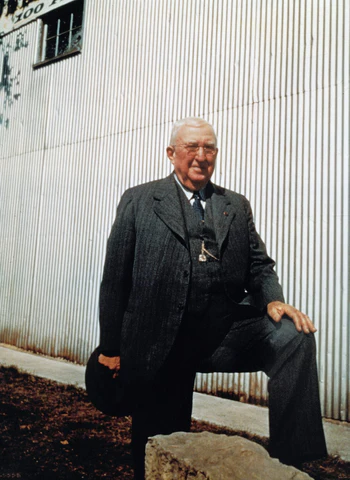
In 1864, James Beauregard Beam was born into his family’s Kentucky distilling dynasty. At the age of 30, in 1894, “Jim” took over operations from his father David at the family distillery, which was by then called Old Tub Distillery. Soon after, the operation was renamed the Jim Beam Distillery.

Thanks in large part to Jim’s business acumen, the Beam family had become a bourbon-producing powerhouse in Kentucky by the early 1900s. When Prohibition hit in 1920, the Beams found themselves without a business, along with thousands of other Kentucky bourbon producers. Jim was forced to sell his liquor holdings and to try other means of supporting his family. He worked as a coal miner, a citrus farmer, and briefly ran a limestone quarry.

When Prohibition ended in 1933, Jim Beam was ready to get back to what he loved most. Beam and his son, T. Jeremiah, relocated to Clermont, Kentucky, and rebuilt the distillery by hand in just 120 days. From that point onward, the business grew with amazing speed and reach. The Jim Beam brand is now the world’s best-selling whisky and is considered to be one of the most iconic names in the spirits industry. 

Jim Beam died on December 27, 1947, at the age of 83.

The Big Players That Own Everything

Walk up and down the aisles of your favorite liquor superstore and you’ll experience the dizzying number of choices that are available to the average consumer. Some of the larger retail outlets, for example, will have double aisles filled with just one category; hundreds of gins, hundreds of vodkas, masses of mezcals and tequilas.

To look at all those choices, it would be easy to assume that they represent many hundreds of companies, but the reality is that a vast number of major brands in the marketplace are owned by a small handful of alcohol conglomerates.

Who are these spirits behemoths? Five companies dominate the playing field:

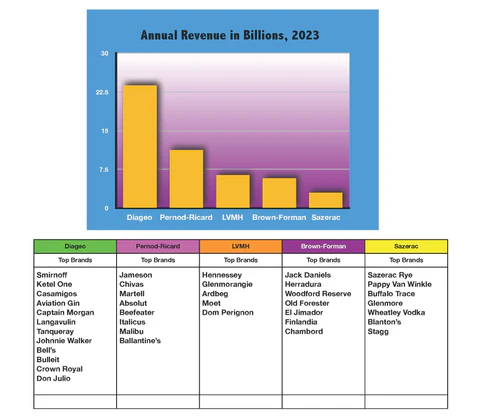
  1. Diageo: Trying to decide between Smirnoff, Ketel One, or Ciroc for your vodka purchase? Well, all three are owned by Diageo. Looking at Scotch or Bourbon? You can choose from Diageo’s Johnnie Walker, J&B, Bell’s, Bulleit, Lagavulin, The Singleton, Buchanan’s, Black & White, Grand Old Parr, Talisker, Haig, or Cardhu. Diageo’s impressive portfolio also includes Tanqueray gin, Don Julio and Casamigos tequilas, Captain Morgan spiced rum, and Bailey’s. With more than 200 brands in its control, the company’s 2023 net sales figure of $23.8 billion makes them the global leader in spirits sales by far (more than double the number two).
  2. Pernod Ricard: This French-owned giant is the second-largest major player, boasting iconic brands like Absolut vodka, Beefeater gin, Chivas Regal Scotch whisky, Jameson whiskey, Havana Club rum, and Malibu liqueur and controlling about 235 other labels. Their 2023 revenue of $11.3 billion is a testament to their global reach, with a market share exceeding 14% in the worldwide wine and spirits market.
  3. LVMH Moët Hennessy Louis Vuitton: LVMH is more than just alcohol: It’s a luxury conglomerate that encompasses dozens of fashion and lifestyle brands, but also includes about 30 prestigious spirits brands such as Hennessy cognac, Dom Pérignon champagne, Glenmorangie single malt Scotch, Ardbeg whisky, and Belvedere vodka. The Moët Hennessy division alone brought in $6.4 billion in revenue for LVMH in 2023, which puts them third in global spirits hierarchy.
  4. Brown-Forman Corporation: This American company is known for its focus on bourbon and whiskey, with brands like Jack Daniel’s Tennessee whiskey, Woodford Reserve bourbon, and Old Forrester. Their 2023 net sales of $5.8 billion demonstrates the strength of American whiskey on the global stage, with Jack Daniel’s alone estimated to command a market share of more than 50% of the Tennessee whiskey category.
  5. Sazerac Company: Another American giant, Sazerac is famous for its Sazerac rye whiskey, but their portfolio also includes Fireball cinnamon whisky, Southern Comfort liqueur, Buffalo Trace bourbon, Pappy Van Winkle bourbon, and roughly 445 other alcohol brands. Sazerac is estimated to exceed $3 billion in revenue annually.

In addition to all the brands that fall under the umbrella of the top 5 largest conglomerates, there are hundreds of brands that sell themselves as “craft” or “small” when they are, in fact, rather large. Tito’s Vodka, for example, was certainly at one time “handmade,” but this company sold 88 million bottles in 2022, recently overtook Smirnoff in sales, and now has an estimated annual revenue of more than $1 billion.

While the “Big Bev” companies dominate the market share (and their products are, by and large, of excellent quality), there is still a wealth of diversity to enjoy from the truly small and independent producers. Local craft breweries, independent wineries, and regional distilleries operate in nearly every major population center in America and their products often never travel much beyond their immediate region. The Brewers Association estimates that there are over 9,700 breweries in the US alone, about 9,500 of which are considered to be “craft.” There are 2,750 craft distilleries in the US. These smaller players often utilize the highest-quality ingredients, develop cutting-edge brewing, vinifying, and distilling techniques, and offer innovation and creativity in categories where larger brands may not dare to go.

Are You a 700? Bartender Lingo: Part 3

This is one of our favorite topics for newsletters and blog posts.

The next time you’re in a bar or restaurant, pay close attention to how the service teams communicate with each other. You’ll probably notice that they have a language and a set of behaviors all their own. Some of their unique lingo streamlines their communication (in the hospitality industry most people look for the fastest and most efficient way to do everything, as time is critical to service), but some of the lingo is just for fun. A set of terms and phrases that are only known to the service staff adds an “insider” feeling for members of the team and boosts morale and camaraderie.

Here are a bunch more terms you might hear your bartender or waitperson using the next time you’re out on the town:

“Behind the Stick:” The act of getting behind the bar and bartending.

Clopener: Someone who has to close one night and then open the next morning.

“Can I get that dressed?” Request (originated in Texas) for a tequila shot with a salted rim and lime. 

Pony shot: 1 ounce of alcohol as opposed to the standard 1.5 oz. shot or the 2-ounce shot, which is the nip.

Broken Bottle: In addition to the obvious description of a bottle that’s been dropped or cracked, this also refers to one that’s been emptied or “killed.”

Free Pour: When a spirit is poured out of the bottle without measuring in a jigger; only the most experienced bartenders do this.

50% Rule: According to many establishments, the proper time to ask a customer if they want another drink is when they’ve consumed 50% of their cocktail.

Dirty Dump: After shaking a cocktail on ice, all the contents are dumped into the glass without straining.

Long Drink: Contains more volume than the usual; Often more mixer is added. This is also referred to as a “tall drink.”

Marrying: Combining two bottles of the same liquid into one single bottle. It’s illegal to do with spirits, but you might see bartenders doing it with juices or syrups.

Code Brown: This means the bar toilet is clogged.

Turds: This sounds like a “code brown,” but it really refers to the olives in martinis. It can also refer to bottles that don’t move.

Adam and Eve: This doesn’t refer to a biblical cocktail, but rather two beers served in one glass, typically a lager and a darker beer like a stout.

Baby: A small, often quick shot of beer, professed to be perfect for satisfying a small thirst or downing a round quickly with friends.

Boomerang: A customer who comes back for another drink after just leaving. (Also a drink sent from one bartender to another).

Drain Pour: A drink that isn’t quite right and has to be discarded.

Dust bunnies: Those forlorn bottles collecting dust on the highest shelf, often containing obscure liquors or forgotten brands.(Also called “turds.”)

Hazmat: Nickname for particularly messy or complex cocktails that require a lot of cleaning up after.

Loons: Annoying or disruptive customers who can put a damper on the atmosphere.

Spec: A drink created by the bartender themself, often a creative experiment or a seasonal special.

There is also a wide range of number-based terms, or codes, that are commonly used in the industry:

68: Means an item should be put back on the menu (the opposite of 86, which is to delete or cancel something).

13: Means the boss is around

81: Customer wants a glass of water

95: Customer left without paying

200: A waiting customer

700: An attractive customer

So, next time you visit your favorite bar, look for the person who’s behind the stick and, if you’re in the mood, ask for a spec drink or a dressed tequila shot. That’ll make you a 700 in the eyes of your bartender and you’ll feel like a true hospitality industry insider. 

We’ll stay on the lookout for more bartender lingo that we can share. And, if you hear something fun from behind the bar, let us know or share it by tagging us at @drinkbatch22!

Batch on the Menu

When we first entered the spirits market with Batch 22, we plunged in headfirst. We did our research and pre-planning, of course, but like so many things, we soon found out that there’s a whole bunch of critical stuff you can only learn by doing.

For example, we assumed that most visits to a bar or restaurant would go as follows: We show up, pour Batch 22 for the beverage manager or head bartender, they love it, and within a few days, they’d have Batch 22 on their cocktail menu. [Insert loud buzzer sound here.] Wrong. We quickly learned that most cocktail menu decisions are usually made by more than one person and are often subject to predetermined schedules. Some places roll out a new cocktail menu every month. Some do it every quarter or every season. Some only do it when they decide it’s time to change. So, the bottom line is—no matter how much they love Batch, it’s still a lengthy process to actually get it on a menu.

And then there’s our experience with Jar Restaurant.

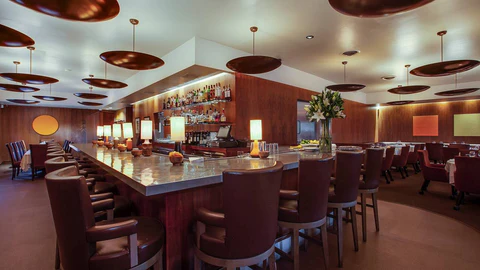
Only a few weeks ago, Matthew found himself with a little time to kill before a dinner reservation in the Beverly Grove neighborhood of Los Angeles, so he wandered into Jar to have a drink. Of course, Matthew was soon regaling the bartender with stories about Batch, then pouring Batch for her, and then leaving samples as he headed out to his dinner.

The next morning, Matthew’s phone rings. It’s Suzanne Tracht, chef/owner of Jar. She had tasted the samples Matthew left and absolutely loved Batch 22! She explained that she had been searching for an aquavit for a while and hadn’t found one she liked until Batch came along. Her plan was to use Batch 22 in various recipes and also to feature it at the bar. She asked Matthew to get a case to the restaurant as soon as he could. The day he delivered it, Jar added a version of the Batch Negroni to their menu. Voila! That’s how it’s supposed to work!

It wasn’t until Matthew hung up the phone that morning that he discovered just who Suzanne Tracht was.

Chef Tracht has been a driving force in the Los Angeles food scene for over two decades. She honed her skills under the mentorship of Chef Siegbert Wendler at the prestigious Arizona Biltmore Resort and Spa before coming to SoCal, where she worked in the esteemed kitchens of the Hotel Bel-Air and Campanile under acclaimed chefs Nancy Silverton and Mark Peel. She then became Executive Chef at Jozu, a Cal-Asian restaurant that quickly garnered recognition as one of LA’s best new establishments.

In 2001, Chef Tracht opened her own restaurant, Jar, and was named one of America’s Best New Chefs by Food&Wine. Known for its focus on seasonal ingredients and innovative takes on classic dishes, Jar became a critical and commercial success and has remained an icon in the L.A. food scene for more than two decades. Chef Tracht’s culinary expertise has also been showcased on numerous television shows, including “Top Chef Masters ” and “Hell’s Kitchen.”

Needless to say, we are honored to have an association with Chef Tracht and Jar. We look forward to working with her and supporting her efforts to make Batch 22 a part of Jar.

Also:

A Batch Specialty Cocktail in Studio City, Los Angeles

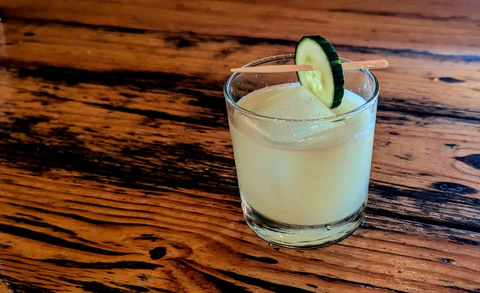
We’ve been courting our friends at Laurel Tavern for a few months now; we love the casual vibe of their bar, their comfy outdoor space, and their great food. This week, Laurel Tavern added the Double Deuce to their cocktail menu. Created by super-talented bartender Aaron Jaeger, this clean, crisp, and refreshing concoction combines Batch 22 with gin, lemon juice, honey, ginger syrup, and muddled cucumber (recipe posting soon). We’re very proud of it. Cheers!

La Ciudad de Cocktails: Mexico City

We’ve seen the trend developing over the past few years, and this year it’s become even clearer: Mexico City is where it’s at in the cocktail world.

Take a look at the Top 10 Best Bars in North America list, published every year by TheWorlds50Best.com. Mexico City has 4 bars in the Top 10, including the #1, Handshake Speakeasy. New York City also has 4 in the Top 10. That’s significant. There are 3 more Mexico City bars in the Top 30, and 2 more in the Top 50. That’s 18% of all the Top Bars in North America. Los Angeles has 2 bars on the entire list. Same for San Francisco and Washington, D.C.

Now, New York City has a major presence on this list as well (a total of 12 bars, or 24% of the total) but that’s no surprise. New York has been a cocktail capital for decades and continues to hold strong year after year. But the growth in cocktail culture in Mexico City is notable.

Food & Wine says, “Mexico Is the Most Exciting Place in the World to Drink Right Now.”  Men’s Journal says, “Mexico City Is the World’s New Cocktail Capital.” Even though it seems to many that Mexico City has suddenly burst onto the high-end cocktail scene, the real growth in its cocktail culture goes back to 2011, when the groundbreaking center of cocktail craft, Licoreria Limantour, first opened its doors. That bar paved the way for a flood of new and innovative bars to open, and it ushered in a period of unmatched growth and creativity in the Ciudad de Mexico (CDMX) beverage industry.  No longer was the city’s bar scene dominated by cantinas serving up syrupy margaritas and spicy micheladas. Instead, Mexico City’s most popular bars were featuring premium spirits and more local ingredients, serving up innovative cocktails that rivaled any bar in the world. Licoreria Limantour, for example, became famous for their signature drink, the Margarita Al Pastor, which features ingredients inspired by Mexico City’s street tacos, such as pineapple juice, fresh herbs, and serrano chile

A massive explosion in tourism has also fueled the expansion of CDMX’s universe. In 2022 alone, international tourism jumped more than 20 percent to an estimated 66 million visitors. Those patrons have thirsted for a bar culture that promotes indigenous flavors, local ingredients, and cocktail menus that reflect true originality and experimentation. Today, it’s not uncommon to find cactus fruit, tomatillo, fermented mesquite honey, or copal (tree resin) on a cocktail menu.

By highlighting and celebrating relatively unknown ingredients, such as sotol, raicilla, bacanora, local gins, local whiskeys, and a wide variety of local mezcals, rising-star mixologists and bar proprietors have created new markets for Mexican spirits the world over.

Mexico City’s Handshake Speakeasy, the “World’s Best Bar” according to the website theworlds50best.com, has been in the Top 10 for a number of years.  Concoctions such as their Butter Mushroom Old Fashioned (bourbon, brown butter, mushroom and maple served with enoki mushrooms), or their Mexi-Thai, which combines tequila with makrut lime, coconut basil oil, and tomato are just a few of the wonderfully inventive and interesting drinks offered on their menu.

Rayo, which comes in at #5 on the Best Bars list, crafts every cocktail on their menu with agave distillates and highlights traditional Mexican ingredients. Their Number 1 (mezcal, rum, amaro, beef broth, bacon, lacto-fermented vegetables, beer, cilantro, and a beef chicharrón garnish) emulates the flavors of “Carne en su jugo,” a traditional dish from Jalisco, which is agave country.

Mexico at large is also staking its own place in the world of non-agave-based spirits. Today, for example, you can find white (unaged) heirloom corn whiskeys from the states of Michoacán, Guanajuato, Oaxaca, Baja California, and Estado de Mexico, and over a dozen gins that feature uniquely Mexican botanicals.

You don’t need to travel to Mexico to appreciate its growing influence in the cocktail world. As the country has gained popularity and notoriety for its traditional flavors and ingredients, those flavors have found their way to bar menus all over North America. So, next time you’re in a craft cocktail bar, see if you can spot the sotol, bacanora, or raicilla; they’ll offer you an exciting new way to appreciate the stunning diversity of flavors that Mexico has to offer.

Robot Bartenders!

What do you look for in a bartender?

Think back for a minute. What have been the most satisfying bartender experiences you’ve had in the past? Were they times when you found comfort in a friendly face? An accommodating professional who could listen to your cocktail preferences and create a “customized” cocktail for you? How about a compassionate listener who agrees wholeheartedly with your assessment that your boss is a jerk and your spouse doesn’t understand you? Or have your most satisfying experiences been times when you needed an expertly assembled drink as soon as possible and had it served up fast?

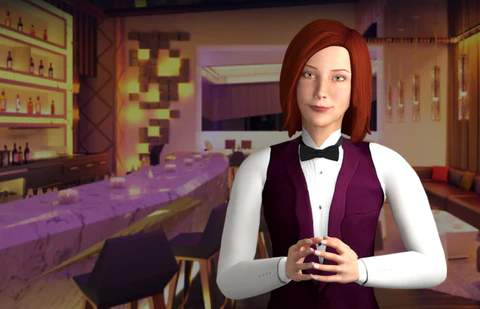
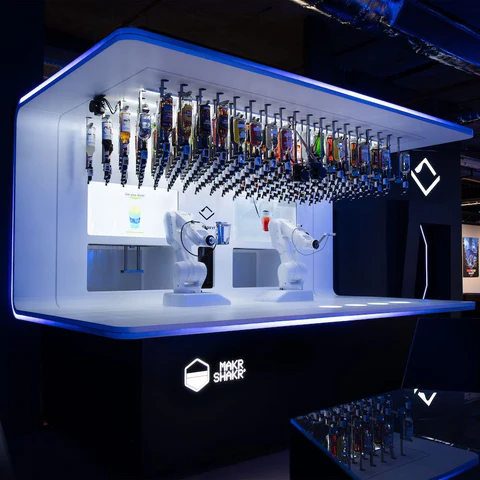
Whatever kind of bartender you most like, there may be a robot out there to suit your needs. Robot bartenders are now a thing, and their popularity is growing throughout the world. The range of designs and delivery systems varies widely, from animated “virtual bartenders” on touch screens, to humanoid machines wearing vests and bowties, to fast-moving robotic arms that snatch and shake bottles at amazing speed. No matter what the design, companies that make robot bartenders all hype the same basic selling points: Robots can make more drinks more quickly and more efficiently that human bartenders can. Oh, and some can even make small talk.

So what about the “human” side of the bartending and bar experience, you ask? This element is certainly forever changed—if not completely erased—by robot bartenders, even though some companies tout their product’s ability to interact with its customers in astonishingly personalized ways. Some high-end robot bartenders are equipped with advanced technology that can help tailor the customer experience to each individual. For example, some robots come with built-in cameras that can scan customer faces and use AI to personalize their drink orders. Other robots can be programmed to create signature cocktails that can be customized for specific events, ingredient preferences, or seasons.

Cecilia is a robotic bartending system developed by a company called Cecilia.ai. An animated figure that interacts with users from a touch screen and a video-game-style console, this system can hold 70 liters (18.4 gallons) of alcohol and mixers and can make 120 drinks per hour. When you step up to Cecilia, you can tell her what you’d like or ask her for recommendations. She even has a voice recognition feature so she can recognize returning customers and know their preferences.

If you prefer your humanoid bartender to be more three-dimensional, there’s BRILLO, developed by researchers at Italy’s University of Naples starting in 2020. This robot can not only quickly whip up a cocktail, it can also remember your favorite drink and have a conversation with each patron. The university’s team of computer scientists used machine-learning algorithms to teach BRILLO, which is short for “Bartending Robot for Interactive Long-Lasting Operations,” how to interact with human customers. The robot can gauge whether the tone of a conversation is serious or playful and it can ask relevant and engaging questions. It can even crack a joke if it’s appropriate.

For those who don’t need the human aspect of bar interaction, there are a number of companies currently producing robotic bartending systems that are basically two robotic arms. These highly efficient and swift-moving machines are capable of serving up 80-120 drinks per hour with pinpoint accuracy and flawless consistency. Unlike the more humanoid designs, these robots can work with upwards of 150 different bottles and can create a much wider range of cocktails than their competition.

One of the world’s leading robotic-arm bartending systems is made by a company called Makr Shakr, which produces a robot they call Toni. Able to mix 80 drinks per hour from a bar of 158 bottles, Toni was the first robotic bartender to be employed in an airport. In 2023, Toni started pouring at Singapore’s Changi airport and is slated to be installed at a number of other major international destinations this year.

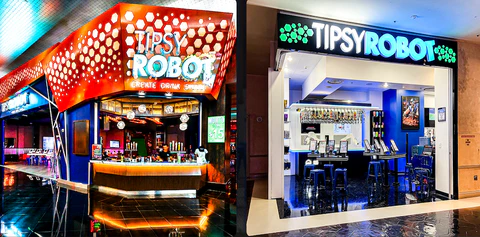
A company called Tipsy Robot is trying to find the sweet spot where efficient non-humanoid bartenders can also provide some of the entertainment of a human bartender. Their machines are each capable of making 60 different cocktails and serving up 120 drinks per hour. As they mix and pour, these robots also perform what the company calls “killer dance moves.”

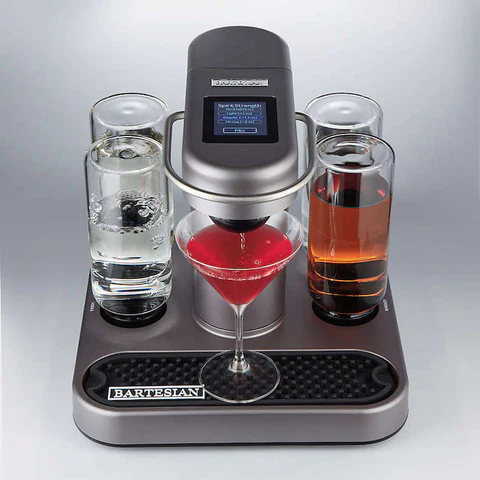
The higher-end robots on the market these days will run between $100,000 and $200,000 (Toni, from Makr Shakr has a price tag of around $110,000). If you’re not quite ready to equip your bar with a high-end robot, you might consider the simpler, “coffee machine” style robotic drink mixer, which has limited capacity, works a little more slowly, and doesn’t do any dancing for you. Depending on the model, these will run anywhere from $200 to a few thousand.

Not ready to have a robot mix anything for you? The technology may be cool, but losing that real human interaction—that unique experience you can only get from a person on the other side of the bar—is perhaps a loss that’s just not worth getting a drink in 60 seconds.

For a little fun, you can check out these videos of robot bartenders at work:

Drink Like It’s 1776: July 4 Cocktails

America’s Founders loved to drink. During Colonial times, sanitation was not great and water sources were often not potable. For hydration, it was common for folks to drink madeira, port, beer, or rum fairly consistently throughout the day. Alcohol, in fact, was thought to cure illness, provide strength, and warm the body. By the end of the eighteenth century, U.S. per capita alcohol consumption was in the neighborhood of about 7 gallons per person (today it’s more like 2).

All this is to say that we at Downtime Cocktails think the best way to toast the Founders who established our great nation is to…well, toast them. Raise a glass or two and celebrate our independence.

Here are a few throwback-style recipes that may help to evoke that great old Colonial feeling of 1776.

George Washington: Even though he was the owner of the largest whiskey distillery in the United States when he died, the Father of Our Country wasn’t considered a big drinker. He was fond of porter, madeira, wine, and strong rum punches, but, in general, the General was not known to drink very much.

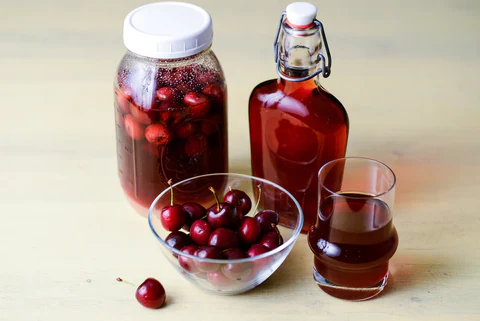
One of the few cocktails he was known to favor was called a cherry bounce, which is a brandy-based drink that became very popular in the later eighteenth century. This recipe comes straight from the Mount Vernon Society and is recognized as the official Washington Cherry Bounce. Of course, we suggest amending it a bit by subbing in 2 cups of Batch 22 for half the brandy.

Washington’s Cherry Bounce (makes 3 quarts)

  • 10 to 11 pounds fresh sour cherries, preferably Morello, or 3 (1-pound, 9-ounce) jars preserved Morello cherries
  • 4 cups brandy (or 2 cups Batch 22, 2 cups brandy)
  • 3 cups sugar, plus more as needed
  • 2 cinnamon sticks, broken into pieces
  • 2 to 3 whole cloves
  • 1 (1/4-inch) piece fresh whole nutmeg
  1. Pit the cherries, cut them in half, and put them in a large bowl. Using a potato masher, carefully mash the fruit to extract as much juice as possible. Strain the juice through a large fine-mesh strainer, pressing the fruit with a sturdy spoon. (You should have about 8 cups.) Reserve the mashed cherries in the freezer or refrigerator for later use. If using jarred cherries, drain the fruit and set the juice aside before halving and mashing the cherries. Add any pressed juice to the reserved jarred juice.
  2. In a lidded 1-gallon glass jar, combine the juice with the brandy and sugar, stirring to dissolve the sugar. Cover with the lid, and set aside in the refrigerator for 24 hours, occasionally stirring or carefully shaking the jar.
  3. Bring 2 cups of the juice to a simmer over medium heat. Taste the sweetened juice and add more sugar, if desired. Stir in the cinnamon sticks, cloves, and nutmeg, then cover and simmer for about 5 minutes. Remove from the heat and set aside to cool at room temperature. Strain, and discard the spices.
  4. Stir the spiced juice back into the 1-gallon glass jar with the reserved sweetened juice. Cover loosely with the lid, and set aside for at least 2 weeks before serving, occasionally shaking the jar with care.
  5. Serve at room temperature in small cordial or wine glasses. Store the remaining cherry bounce in the refrigerator.

Flip for the Fourth
One of the most popular drinks for American colonists was called a flip. Another favorite of George Washington’s, the flip was commonly made of mulled ale as a base to which rum or brandy was added, along with eggs, and molasses. That mixture was then stirred to a warm, caramelized froth with a hot poker.
There are many variations of the flip that later became popular in the 1800s, including the sherry flip, the less boozy alternative to eggnog.
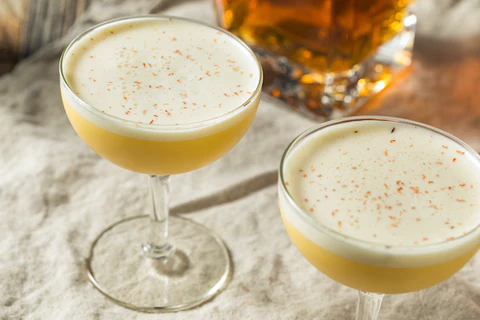
The flip is a versatile format for many different spirits, including sherry, brandy, cognac, whiskey, and bourbon. Here’s a recipe for a bourbon flip that makes a light, creamy cocktail with a satisfying boozy finish. Note: A classic flip contains raw whole egg (as does a classic eggnog).

Boozy Bourbon Flip

  • 2 oz. good bourbon (we love Fierce & Kind)
  • 1 oz. simple syrup (see note for homemade)
  • 1 large egg
  • 3 to 4 ice cubes
  • freshly grated (or ground) nutmeg for garnish

Instructions

  1. In a cocktail shaker with ice, combine the bourbon, simple syrup, and egg.
  2. Shake vigorously (about 1-2 minutes) to chill and create a good foam and body with the egg.
  3. Strain into a coupe or champagne glass and top with freshly grated nutmeg. Serve immediately.

NOTE
For simple syrup, combine equal parts water and sugar in a saucepan. Bring to a low simmer and stir until sugar is dissolved. Remove from heat and cool to room temperature before using.

Thomas Jefferson, Oenophile
Thomas Jefferson is credited with singlehandedly raising America’s understanding of viniculture and appreciation of wine as a fine beverage. In addition to being one of our country’s most influential statesmen, Jefferson also acted as the “official wine advisor” to Washington, Madison, and Monroe. He allocated 200 acres of his Monticello estate to viticultural experimentation and was one of the first people in the United States to grow French varietals.

As president, Jefferson imported more than 20,000 bottles of French Bordeaux (he had previously been the U.S. ambassador to France, so he knew what he liked!) and was the first person to stock the White House with wine (he loved Chateau Margaux Bordeaux and Chateau D’yquem Sauternes; he reportedly spent a third of his salary on French wine during his first year).

This recipe combines white wine with a few more herbal components to create a light, crisp, and complex martini-like cocktail. We use Lillet (a white wine aperitif) but you could substitute any non-oaked white wine (sauvignon blanc or similar) or you could go richer and more honey-like by using a Sauternes, which would make TJ very happy.

Jefferson’s Vin Cocktail

Shake over ice:

  • 1.5 oz. Batch 22 Classic Gold aquavit
  • 1 oz. Lillet
  • 1 oz. Suze
  • 0.5 oz. Rosemary syrup
  • 0.5 oz. Giffard Pampelmousse
  1. Strain into large Martini glass
  2. Add tonic to fill
  3. Garnish with grapefruit peel

Ben Franklin, Innovator
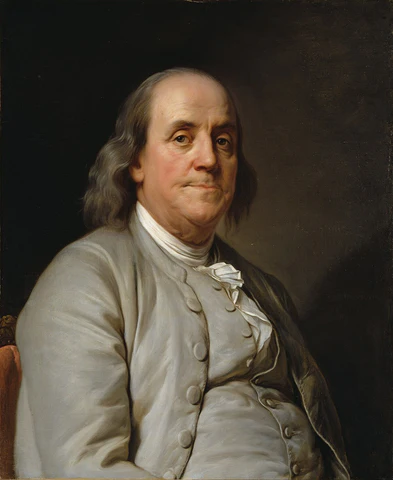
Stewed. Bowz’d. In the Sudds. Nimtopsical. Benjamin Franklin coined more than two dozen terms for being drunk. Yet, he was no fan of overindulgence. He did love food and drink, but had an outright disdain for drunkenness, which he called a “terrible evil.” Franklin is famous for his experiments and inventions—discovering electricity, inventing bifocals, fireplace stoves, swim fins, and various instruments among other things—he was also fond of inventing in the kitchen.
This recipe, based on a milk punch Franklin was known to have loved, uses Batch 22 in conjunction with brandy (the original recipe was all brandy). Franklin may have discovered electricity, but it would be another 160 years or so until the first electric refrigerator was invented. Most people enjoy this cocktail well chilled, but Franklin always had his served warm.

Electric Milk Punch (makes 15-20 servings)

  • 3 cups brandy
  • 3 cups Batch 22
  • 11 lemons
  • 4 cups water
  • 0.75 cups sugar
  • 1 nutmeg
  • 3 cups whole milk

Instructions

  1. Remove peel from the lemons with a vegetable peeler, taking care to remove only the yellow part of the rind (not too much pith). Add the lemon peel to the brandy and steep for 24 hours.
  2. Juice the lemons and reserve 2 cups of lemon juice (about 5 or 6 lemons) in the refrigerator.
  3. After 24 hours at room temperature, strain the brandy and discard the lemon peel.
  4. Add the lemon juice, water, sugar and freshly grated nutmeg to the brandy and stir well.
  5. Heat the milk in a large pot over medium heat, taking care not to burn or scorch it. When the milk is hot, remove from heat and slowly stir in the brandy mixture. Curds will form immediately. Let sit for 5 minutes, then gently stir.
  6. Let sit for another 20 minutes, stir gently, then allow mixture to sit for 1 1/2 hours, undisturbed.
  7. Strain the mixture through a nut milk bag and then again through a coffee filter. Refrigerate until well chillled and pour into a rocks glass. Top with grated nutmeg.

Dolley Madison, America’s Favorite First Lady
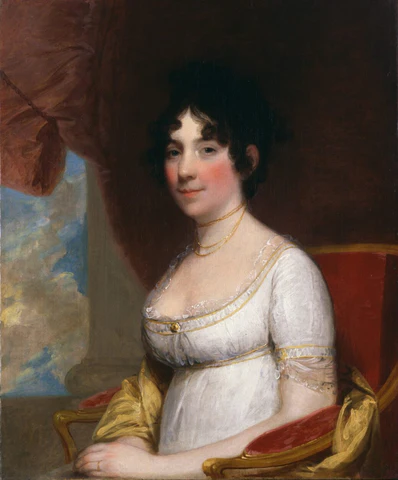
The Whiskey Sour is widely considered to be the first “real” cocktail ever created. One of the drink’s earliest adopters was Dolley Madison, who was one of America’s most beloved first ladies. Mrs. Madison had a far-reaching reputation as an enthusiastic socializer and a great hostess. Dolley hosted many grand parties in the White House from 1809 to 1817 (she also played hostess for many of President Jefferson’s official functions) and was reputed to favor the Whiskey Sour as her go-to cocktail for entertaining. Here’s our version of her classic Whiskey Sour, which simply cuts the bourbon component with half aquavit.

Dolley Madison’s Whiskey Sour 22

In a shaker over ice combine:

  • 2 oz. Batch 22
  • 2 oz bourbon
  • 1.5 oz fresh lemon juice
  • 1 tsp fine sugar

Strain into a chilled cocktail glass and garnish with a cherry.

Java Jivin’: 6 Great Coffee Cocktails

Are you a Caffiend?

If you’re a spirits enthusiast and you love coffee, the last few years have been a java-sipping paradise for you.

Coffee cocktails have been one of the hottest trends to hit the American bar scene in recent years. Sure, the ubiquitous Irish Coffee has been a bar and restaurant staple for generations, but coffee cocktails have now even evolved way past espresso martinis and coffee cordials. Now, you’re likely to find some sort of coffee concoction on almost any cool bar menu you encounter. Cold brew Negronis. Coffee Old Fashioneds. Affogato Martinis. The coffee buzz can simply not be ignored.

Scandinavians have long known that coffee and aquavit are a great match. In fact, many Nordic folks simply add aquavit directly to their coffee and call it a day (or night). We’ve found that Batch 22 is an exceptional partner for coffee, and we’ve developed a bunch of coffee-centric aquavit cocktails that we’d like to share with you here.


Liquor-ish

We’ve spent the last couple of years telling people that we don’t like the traditional aquavit flavors of fennel and anise, but in some cases, those flavors are actually a positive addition for us. For coffee cocktails in particular, an anise component combines beautifully with the coffee and the aquavit base to create a wonderfully rich and luxurious dessert elixir.

In a shaker with ice combine:

2 oz. Batch 22
.5 oz. Sambuca
.75 oz. First Light Coffee Whiskey
1.5 oz. espresso, freshly brewed
3 dashes orange bitters
2 dashes chocolate bitters

Shake until well-chilled and strain into a chilled cocktail glass. Garnish with coffee beans.

Bon Giorno

Here’s a great coffee cocktail that packs a punch and works as well after dinner as it does as an eye-opener in the morning. The cocktail was inspired by a recipe that originally used cognac, but we wanted it to be a bit less heavy, sweet, and boozy, so we used Batch 22 instead. Fantastico.

Ingredients

1.5 oz. Batch 22
1/2 oz. Mario’s Hard Espresso
1/2 oz. Averna amaro
1/2 oz. Xila liqueur (like a spicy mezcal)
1/2 oz. cold-brew coffee*
2 dashes chocolate bitters
Mint leaf for garnish

Add the Batch 22, Mario’s coffee liqueur, amaro, Xila liqueur, cold-brew coffee, and chocolate bitters into a shaker with ice and shake briefly to chill. Strain into a double rocks glass over a large ice cube. Garnish with a large fresh mint leaf.
*Use your favorite bottled cold-brew coffee or make it yourself by soaking 140 grams ground coffee beans in a coffee filter with 32 oz. water for 12 hours. After steeping, remove the grounds from the coffee filter.

K9

When we found out that San Diego-based Seven Seas Coffee Roasters was going to join Batch 22 as part of the K9 Foundation Gala in New York City last year, we added a special espresso drink to the menu. This one is a hazelnut riff on the classic White Russian.

In a glass with ice mix:


1.5 oz. Batch 22
1 oz. Frangelico
.5 oz. Cream
2 oz. Espresso

Garnish with coffee beans, if desired.

The Chi Town Brick

Tracy, the wife of Downtime Cocktails co-founder Bruce, spent a good part of her childhood in Chicago. She remembers one of her favorite ice cream treats was called “Chicago Brick,” a version of which combined the flavors of coffee, orange, and vanilla in layers, much like the more common Neapolitan, which is chocolate, strawberry, and vanilla.

While R&D-ing coffee cocktails that use Batch, this recipe became an instant winner with Tracy, so Bruce had no choice but to put it in the permanent rotation.

Ingredients

In a cocktail shaker with ice, combine:
1.5 oz. Batch 22
1 oz. Mario’s Hard Espresso
.5 oz. Cointreau (or other quality orange liqueur)

Shake to chill well and strain into a chilled martini or Nick & Nora glass. Garnish with an orange peel.

Maui Sunset

Most coffee cocktails incorporate cream or egg whites in some form. Very few combine coffee with soda, which creates an entirely different experience. This recipe is a wonderful and unique mélange of tropical notes, smoke, and herbaceousness that is simultaneously lux but refreshing.

Ingredients

1 oz. Batch 22
1 oz. Drambuie
2 oz. Cold brew concentrate
1 oz. Pineapple juice
1-2 dashes smoke bitters (start with 1, add more if desired)
Club soda (to top)
Garnish: 3 fresh basil leaves
Combine all the ingredients, except the club soda, in a shaker with ice and shake. Double-strain over fresh ice in a Collins glass, and top with club soda. Garnish with 3 fresh basil leaves.

Mario’s Esperanto

We created this cocktail as a collaboration with our good friend Joe Grasso, who’s the founder of Mario’s Hard Espresso. Joe founded his company with a recipe that his father created, and everything Joe does—the core identity of his brand—is, in some way, an homage to his dad. We like that.

We recently featured this cocktail as part of our Father’s Day lineup, but it’s so good we couldn’t leave it out here.

Like classic espresso, this dessert cocktail combines flavors of coffee and lemon with some of the added zing of Batch’s herbs and botanicals.

In a shaker with ice, combine:

2 oz. Batch 22
2 oz. Mario’s Hard Espresso
1 oz. Limoncello

Shake well to chill. Pour into a martini glass. Garnish with lemon peel twist.

RECIPES NOTE: Downtime Cocktails is proud to be a founding member of the SoCal Spirits Collective, which promotes and supports local, independent SoCal spirits brands. Because we seek to bolster our fellow members wherever possible, we will suggest SCSC brands in the recipes we publish. For information on all the participating brands and the wonderful spirits they produce, go to socalspiritscollective.com.

Aiding and a Betting: Helping the Ed Asner Family Center

On Saturday evening, June 15, the Downtime Cocktails team was honored to be part of the 12th Annual Ed Asner & Friends Celebrity Poker Night, which was held at NBC’s Radford Studios in Studio City, CA.

The star-studded event raised money for the Ed Asner Family Center, which provides services and support for families and individuals with special needs. Among its many services, TEAFC offers mental health counseling along with expressive arts classes and career programs. A newly launched Adult Program provides classes and support that includes The Dating Spectrum, Sex Education, and Relationship/Couples Coaching.

TEAFC was founded by Matthew Asner and his wife Navah in 2012. Matthew is the son of legendary television actor Ed Asner, who was best known as Lou Grant on the acclaimed “Mary Tyler Moore Show,” which ran on CBS for seven seasons (1970-1977) and won an astonishing total of 29 Emmys. Matthew and wife Navah were inspired to create the organization due to their deep personal experience with individuals that have special needs. They have six children, three of which are on the spectrum.

The event on Saturday night featured two Batch 22 specialty cocktails—The Lou Grant (celery soda and Batch 22) and The Royal Flush (Batch 22 with Amaro, Orange Bitters, and San Pellegrino Blood Orange soda) and offered us a great opportunity to pour tastes for a host of Hollywood celebs, industry insiders and influencers, and just plain spirits lovers. It’s always satisfying when we can combine a chance to support a great cause with a chance to have a truly fun time.

For more information on their wonderful work or to make a donation, visit the Ed Asner Family Center.

Verify your age (21+) by entering your birth year.